Losing weight from your hips. What really works, and why it takes time


To lose weight from your hips, lower your body fat overall, through what you eat and through daily walking. Targeted exercises firm up the muscles underneath. They do not melt the fat sitting on top. Hips are often the last place to slim down, and that is completely normal.
A club coach looks at your situation with you and gives you the best advice.
Book your free assessmentIn this article
Hips and hormones
In women, hormones tend to send fat to the hips, thighs and bottom. The body likes to hold on to this store. In men, fat goes more readily to the tummy. After the menopause, the tummy often takes over, and both areas respond to the same approach.
You cannot choose where you lose weight first. Our page on stubborn fat in 1 area explains why, and the page on losing weight from your thighs covers the area right next door.
Targeted exercises, a limited effect
Research has shown it for a long time. Working 1 area does not burn the fat in that area. Squats, lunges and glute bridges still shape your figure. They also help you keep muscle while you lose weight, which matters for the long run.
What really works for your hips
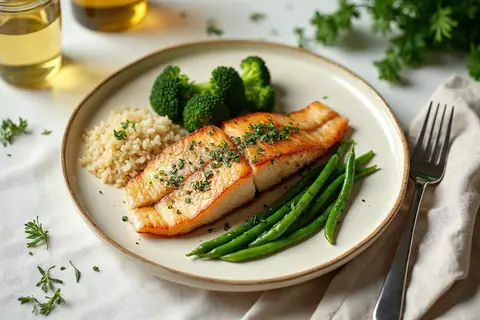
- A balanced plate. Protein at every meal, plenty of vegetables, wholegrain starchy foods in sensible portions and fewer sugary foods. The Eatwell Guide from the UK government shows these proportions on a single plate.
- A brisk walk every day. 30 minutes at a good pace. A loop along the Windrush or through the town centre counts.
- 2 strength sessions a week. The NHS physical activity guidelines for adults recommend strengthening activities on at least 2 days a week, alongside 150 minutes of moderate activity.
- Patience. Measure your hips and your waist once a month with a tape measure. The tape often moves before the scales do.
Aim for a steady pace. The NHS suggests 0.5 to 1kg a week, or 1 to 2lb, in its tips to help you lose weight. A faster pace costs muscle, and the hips are rarely the first to benefit anyway.
Cellulite, creams and water retention
No cream makes fat disappear. Cellulite tends to fade as body fat goes down and as you walk more, although it does not always vanish. If your legs swell or feel heavy in the evening, mention it to your GP. That is not a question of weight.
At the club
At Witney Nutrition Club, your coach trained in nutrition supports you every day, and your first assessment is free. It is a good moment to look at your meals together, before deciding on any plan.
This article gives general information. It does not replace the advice of your GP or another health professional.
Your weight loss curve
Enter your profile and the curve redraws straight away.
At the median pace, it would take about 11 weeks to lose 8 kg. At the gentlest pace, about 4 months.
The benchmark most often given for lasting weight loss is 500 g to 1 kg a week. That is the ideal zone of the chart. Above 1 kg a week on a regular basis, the body draws on its muscles as much as on its fat. That is the hatched zone.
An indicative projection. Every journey is personal and results vary from person to person. The calculation runs on your device, nothing is saved or sent. Over 65, talk to your doctor first.
How this curve is calculated
The top edge of the zone matches 500 g a week, the gentlest pace. The bottom edge matches 1 kg a week, the risk threshold.
The first weeks go faster, mostly water, then the pace slows. After 40, the median curve slows gradually, because metabolism slows. For the same effort, a man usually loses weight a little faster than a woman.
The journey curve adds plateaus of a few days and small regains, as in real life. It does not predict your own journey.
This advice is general. It does not replace medical advice.
Further reading

For day to day support, see the healthy eating programme.