Losing weight after 30, start with your days rather than your plate


To lose weight after 30, look at your days first, not just your plate. Time spent sitting, rushed meals and nights broken by children explain most of the first extra kilos. At this age, your body has barely changed. Your habits have.
A club coach looks at your situation with you and gives you the best advice.
Book your free assessmentIn this article
The first kilos after 30
Between 25 and 35, life fills up. An office job, the car, 1 or more children, less sport than before. The kilos rarely arrive suddenly. They build up little by little, 200 or 300g a year, and you suddenly notice them in a photo or a pair of jeans.
The good news is that at 30 your muscle is still there and your metabolism has hardly moved. Correcting things early takes less effort than at 40 or 50, which we cover in our guide to losing weight after 40.
Desk work
The NHS physical activity guidelines for adults recommend 150 minutes of moderate activity a week, strength exercises on at least 2 days, and breaking up long periods of sitting. Stand up at least every 2 hours, take calls on your feet, use the stairs, get off the bus a stop early. These small things do not replace regular activity, but they count over a whole day. A brisk walk at lunchtime covers a good part of the 150 minutes. If you do not enjoy sport, you can also start by losing weight without exercise.
Meals on busy days
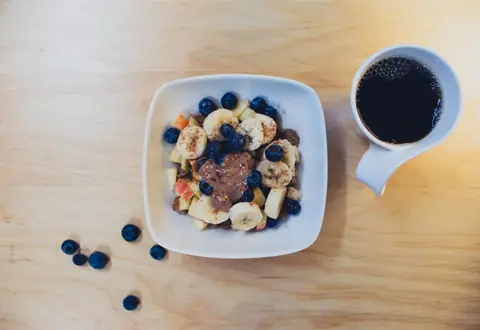
- Morning. Leaving without eating leads to the pastry at 10am. A breakfast that lasts until lunch often solves this. Our article on breakfast for weight loss has ideas.
- Lunch. A meal deal eaten at your desk does not keep you full for long. A box prepared the night before with vegetables, protein and a starchy food does better.
- The children’s tea. Leftover fish fingers and biscuits finished standing in the kitchen add up more than you think. Plan your own snack and eat it sitting down.
- Evening. Tiredness makes ready meals tempting. A few simple dishes cooked at the weekend avoid this trap.
The NHS Eatwell Guide is a simple model for building these meals.
Sleep and young children
Broken nights increase hunger and cravings for sweet food the next day. You do not always choose your nights with a baby. You can however avoid adding to it, with no screens in bed and a regular time for lights out whenever you can. Good sleep makes every other change easier.
Aim small and keep going
Pick 2 changes, not 10, and keep them for a month. A proper breakfast and a daily walk, for example. The NHS suggests losing 0.5 to 1kg a week, about 1 to 2lb, at most. If you are pregnant, breastfeeding or have a health condition, talk to your GP first. This article does not replace advice from your GP or another health professional.
At the Witney club
Busy mornings are exactly what the club is built around. Members have breakfast at the club before work, and the coaches trained in nutrition support them every day. The first assessment is free.
Your weight loss curve
Enter your profile and the curve redraws straight away.
At the median pace, it would take about 11 weeks to lose 8 kg. At the gentlest pace, about 4 months.
The benchmark most often given for lasting weight loss is 500 g to 1 kg a week. That is the ideal zone of the chart. Above 1 kg a week on a regular basis, the body draws on its muscles as much as on its fat. That is the hatched zone.
An indicative projection. Every journey is personal and results vary from person to person. The calculation runs on your device, nothing is saved or sent. Over 65, talk to your doctor first.
How this curve is calculated
The top edge of the zone matches 500 g a week, the gentlest pace. The bottom edge matches 1 kg a week, the risk threshold.
The first weeks go faster, mostly water, then the pace slows. After 40, the median curve slows gradually, because metabolism slows. For the same effort, a man usually loses weight a little faster than a woman.
The journey curve adds plateaus of a few days and small regains, as in real life. It does not predict your own journey.
This advice is general. It does not replace medical advice.
Further reading

For day to day support, see the healthy eating programme.