Fibre and weight loss. How much you need and where to find it

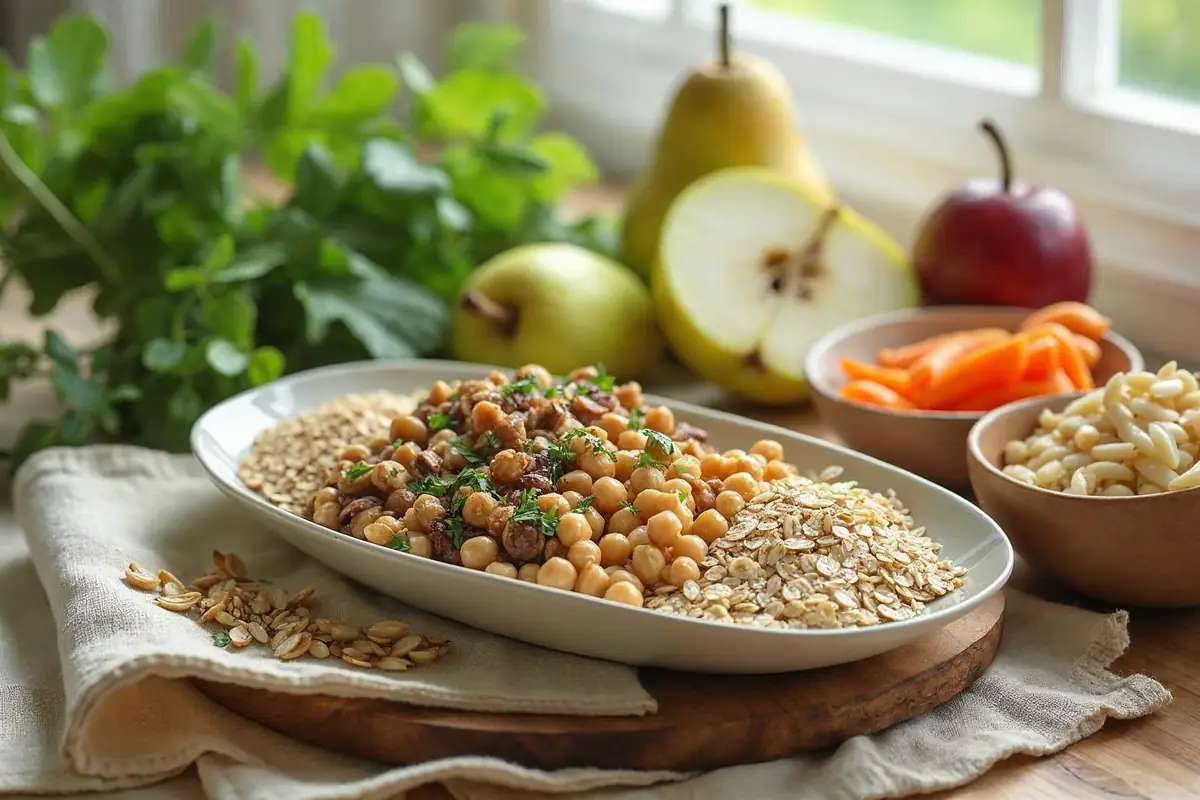
Fibre helps weight loss because fibre-rich foods help you feel full for longer, for few calories. UK guidelines advise adults to eat 30g of fibre a day. According to the NHS, most adults only manage about 20g.
A club coach looks at your situation with you and gives you the best advice.
Book your free assessmentIn this article
What fibre does
Fibre is the part of plants that your gut does not digest. Some types soak up water and slow digestion down. Others add bulk and help food move through. Part of it feeds the friendly bacteria in your gut.
2 authorised health claims sum up some of its effects. Wheat bran fibre contributes to an acceleration of intestinal transit. Oat and barley beta-glucans contribute to the maintenance of normal blood cholesterol levels, with 3g a day. Fibre is one of the nutrients covered on our page about nutrients and what the body needs.
How much fibre a day
The figure of 30g a day comes from the government recommendations set out in the NHS guide to getting more fibre. It is the same for women and men. During pregnancy, constipation is common and fibre often helps. If it persists, your GP or midwife is the right person to ask.
The British Dietetic Association fibre fact sheet gives a sample day that reaches 30g, starting with overnight oats at breakfast.
Fibre and weight loss day to day
A fibre-rich meal takes longer to chew. It takes up room in the stomach for few calories, and hunger comes back later. The NHS page on starchy foods notes that fibre can help you feel full, so you are less likely to eat too much. That is a real help when portions get smaller, alongside our tips to curb hunger naturally.
Wholegrain starchy foods are a good source. Wholemeal bread, brown rice and porridge oats provide far more than their white versions. Our page on starchy foods for weight loss explains which to choose and when.
Where to find fibre
- Pulses. Lentils, chickpeas, baked beans and kidney beans.
- Vegetables, at every meal, and potatoes with their skins on.
- Whole fruit, with the skin when it can be eaten, rather than juice.
- Wholegrains. Porridge oats, wholewheat pasta, wholegrain breakfast cereals.
- Nuts and seeds, a small handful.
Too little and too much
Too little fibre shows first as sluggish digestion. A sudden increase brings bloating and wind. The rule is to add fibre bit by bit, over a few weeks, and to drink enough water at the same time. Tummy pain or a change in bowel habits without a clear reason should be mentioned to your GP.
At the club
At Witney Nutrition Club, support is daily. Your coach trained in nutrition looks at how to fit vegetables, fruit and wholegrain foods into your days, starting with the free assessment.
This article gives general information. It does not replace the advice of your GP or another health professional.
Your weight loss curve
Enter your profile and the curve redraws straight away.
At the median pace, it would take about 11 weeks to lose 8 kg. At the gentlest pace, about 4 months.
The benchmark most often given for lasting weight loss is 500 g to 1 kg a week. That is the ideal zone of the chart. Above 1 kg a week on a regular basis, the body draws on its muscles as much as on its fat. That is the hatched zone.
An indicative projection. Every journey is personal and results vary from person to person. The calculation runs on your device, nothing is saved or sent. Over 65, talk to your doctor first.
How this curve is calculated
The top edge of the zone matches 500 g a week, the gentlest pace. The bottom edge matches 1 kg a week, the risk threshold.
The first weeks go faster, mostly water, then the pace slows. After 40, the median curve slows gradually, because metabolism slows. For the same effort, a man usually loses weight a little faster than a woman.
The journey curve adds plateaus of a few days and small regains, as in real life. It does not predict your own journey.
This advice is general. It does not replace medical advice.
Further reading
For day to day support, see the healthy eating programme.